

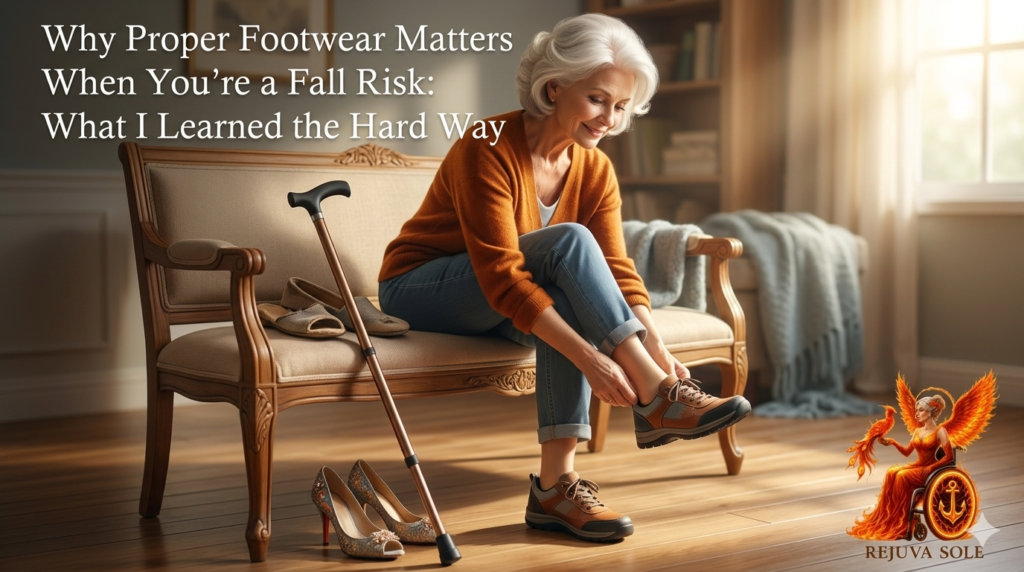
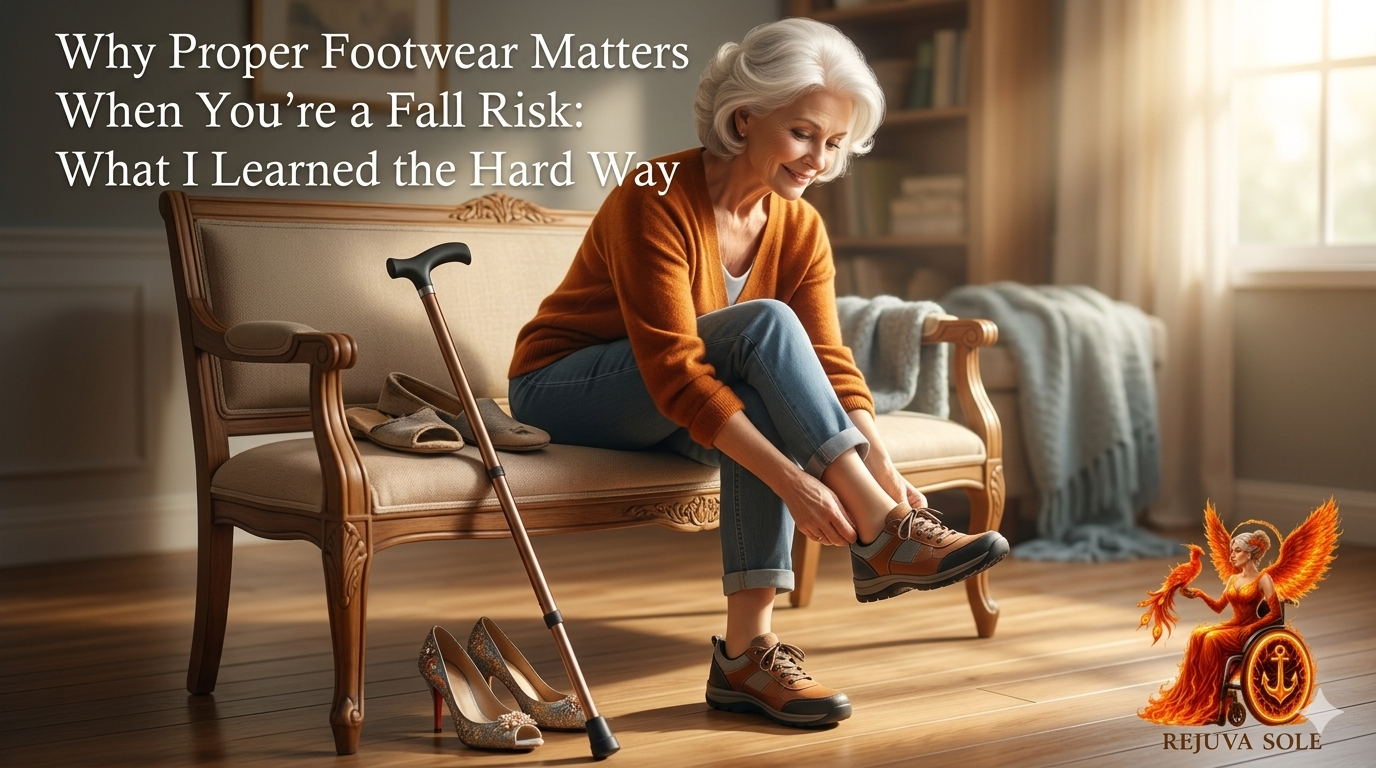
What I Learned the Hard Way
By Tammy Eddy | RejuvaSole.com
I know what it feels like when the floor comes up to meet you.I’ve been a fall risk for years. I use a power wheelchair — my Aily — because my body doesn’t always cooperate with the plans I make. The ER became somewhere I knew too well. The nurses knew my name. That’s not a club anyone wants to belong to.But somewhere between the falls and the fear, I started paying very close attention to my feet.What was I wearing when I fell? What was I wearing on the days I didn’t? What made me feel anchored to the ground — and what made me feel like I was walking on ice, even on dry floors?That research changed everything. And it’s why I built this site.
Falls Aren’t Just Physical — They’re Emotional
Here’s something nobody talks about: the fear of falling is almost as disabling as falling itself.Once you’ve gone down — once you’ve called for help and couldn’t get up alone — something shifts in your brain. You start moving smaller. You stop going places. You grip walls. You cancel plans.The right shoes won’t fix everything. I want to be honest about that. But they gave me something back. A little more confidence. A little more ground beneath me.That matters more than I can put into words.
What the Wrong Shoes Actually Do to Your Body
When you’re a fall risk, the wrong footwear isn’t just uncomfortable — it’s genuinely dangerous.Here’s what I’ve learned from my own experience and research:Smooth soles are a trap. Even on a clean floor, a worn-out sole gives you nothing to grip. You don’t have to slip dramatically to fall — a small slide at the wrong moment is enough.Loose fit throws off your balance. If your foot is swimming inside your shoe, your body is constantly micro-correcting. That’s exhausting, and it catches up with you.Stiff, heavy shoes change how you walk. When shoes fight your natural gait, your muscles compensate in ways that reduce stability. You end up more tired and less steady.Thin soles give your joints no mercy. Every step sends shock straight up through your knees and hips. Over time, that wears you down and makes you move more cautiously — and cautious, hesitant movement actually increases fall risk.
What to Look For When You’re a Fall Risk
I’m not a doctor and this isn’t medical advice — but I am someone who has lived this. Here’s what I look for in every shoe I recommend:
1. A Wide, Stable Base
This is non-negotiable for me. A wider sole gives you more contact with the ground. It’s like the difference between balancing on a beam and standing on a floor. Look for shoes that don’t taper sharply at the heel or toe.
2. Slip-Resistant Outsoles
Not just “rubber” — specifically textured, grippy rubber that’s rated for multiple surfaces. Wet tile in a bathroom is where many falls happen. Your outsole needs to handle that.
3. Secure Closure
Laces are great if you can manage them — they let you customize fit. But if you have tremors, limited dexterity, or fatigue easily (I have medication tremors that affect my hands), look for Velcro or BOA-style closures that give you a secure fit without the struggle.
4. Cushioning That Absorbs Shock
A good EVA or memory foam midsole takes the impact so your joints don’t have to. This reduces fatigue — and less fatigue means more stable movement.
5. Proper Arch Support
Flat shoes with no support let your foot collapse inward with every step. That misalignment travels up through your ankle, knee, and hip. Good arch support keeps your whole body stacked correctly.
6. A Roomy Toe Box
Cramped toes can’t do their job — and their job is to help you balance. Give them room to spread naturally.
My Personal Experience With Stability Shoes
For a long time, I wore whatever was comfortable-ish and available. I didn’t think shoe research was something I needed to do.Then I found a pair with a wide, stable base — really wide, really solid. And something shifted.Not a miracle. Nothing is a miracle. But I could walk short distances again without gripping every surface. I felt a little less like the ground was uncertain beneath me.I could feel a little more like myself.That’s what I want for you. Not perfection. Just a little more solid ground.
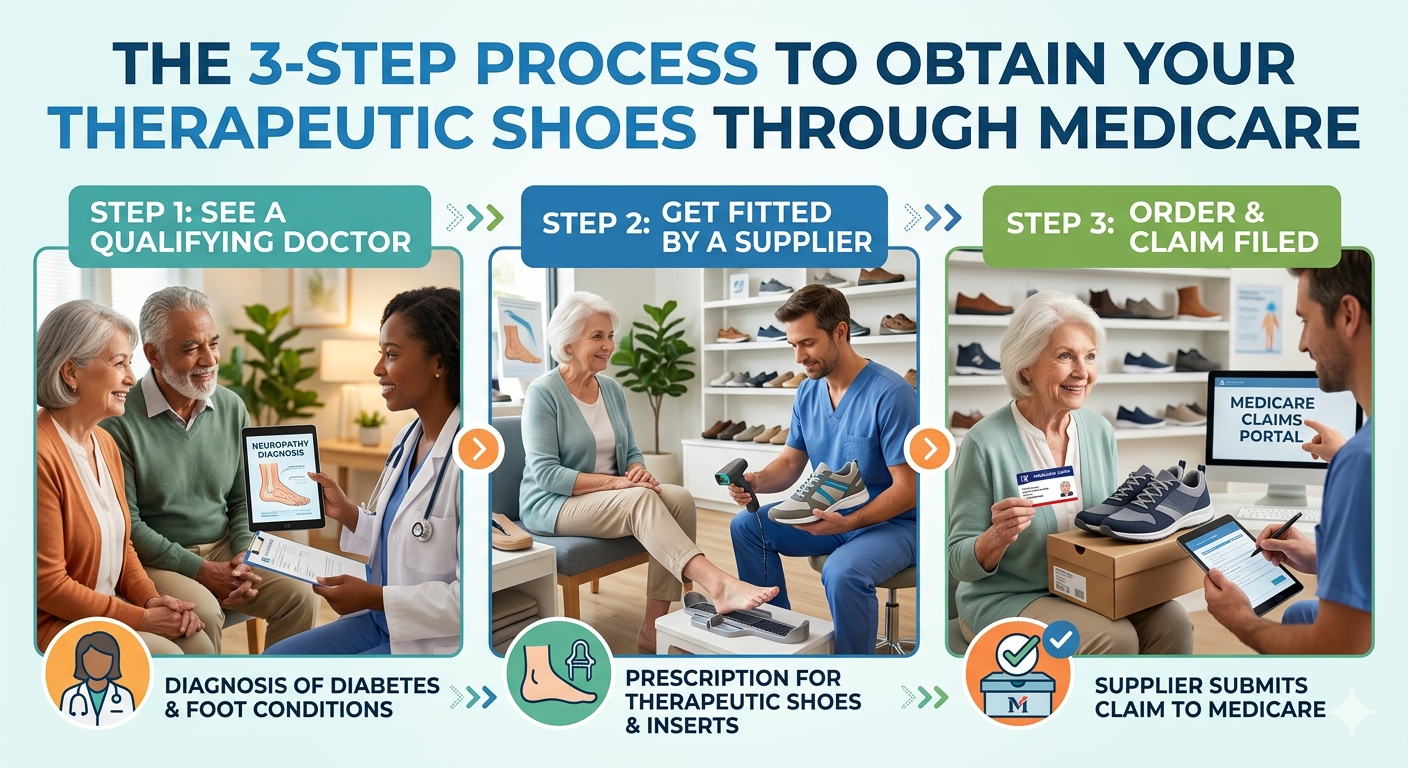
A Note on Medicare Coverage
Here’s something many people don’t know: if you have diabetes, neuropathy, or certain other qualifying conditions, Medicare Part B may cover therapeutic footwear — up to 80% in some cases.That means the shoes I talk about on this site might cost you far less than you think. It’s worth asking your doctor about a therapeutic shoe prescription.I cover the Medicare angle in more detail elsewhere on this site — because nobody told me about it for years, and I don’t want that to happen to you.
You Deserve to Feel Anchored
If you’ve found this post, chances are you or someone you love is navigating mobility challenges, chronic illness, neuropathy, or the daily uncertainty of being a fall risk.I see you. I am you.The shoes I recommend on RejuvaSole aren’t here because some brand paid me to put them here. They’re here because I researched them the way I research everything — carefully, personally, and with real stakes.Because for people like us, the right shoe isn’t a luxury.It’s a lifeline.
Tammy Eddy is the founder of RejuvaSole.com and a disability advocate living with chronic illness. She uses a power wheelchair and writes about therapeutic footwear from lived experience.